If the media industry and the organizations investing in its future are serious about sustaining independent local news — especially outside major metro areas — they need to rethink how rural and small-town news organizations are supported.
Across the country, rural and small-town publishers are not short on ideas. They understand the need to grow digital subscriptions, diversify revenue, strengthen audience relationships and modernize operations. They are not behind on strategy. But what they lack is something more fundamental: capacity to execute.
That conclusion is backed by a recent statewide survey of Oregon’s independent publishers conducted by the Fund for Oregon Rural Journalism (FORJ) in partnership with NW Opinions. Nearly half of these rural and small-town organizations operate with just one to two full-time staff, according to Adam Davis, founder of NW Opinions.
Most are simultaneously managing publishing, reporting, editing, sales and digital operations — often with the same people wearing every hat. One publisher described it bluntly: “I’ve been a player-coach for the last year-plus who’s mostly been playing rather than coaching.”
“This is not a knowledge problem,” said Davis. “It is a capacity constraint problem. And it shows up everywhere.”
More than half of the publishers say a lack of time or expertise often prevents them from making needed digital improvements. Sales growth, audience development and subscription strategy consistently rank as top needs — not because publishers don’t understand them, but because they don’t have the bandwidth to execute. As one publisher put it: “I run out of time and can’t keep it fresh and track the results.”
What is this crisis really costing us? It’s not only resulting in the loss of an average of more than two local outlets a week, according to research by Northwestern University-Medill, it’s costing the surviving publishers the ability to pursue revenue strategies that could sustain their future and support their journalistic endeavors. Limited capacity forces hard choices between building the business and maintaining local coverage. And it’s costing the industry valuable time — lost to stalled progress, missed opportunities and burnout that drives experienced leaders out of the field.

These losses rarely happen all at once. They accumulate over time — until a newsroom can no longer keep up, move forward or continue at all.
Long before the consolidation environment of today, newspapers across this country were started by entrepreneurial publishers rooted in the towns they served, building successful businesses grounded in trust, relevance and daily connection to their communities. That local connection is foundational to community journalism in this country.
In many rural and small-town communities, today’s independent publishers strive to continue that model — but under far more demanding conditions. This is the reality of rural and small-town publishing today: high commitment, fragile economics and too little capacity to bridge the gap between the two.
Founded in 2021, FORJ has pioneered a statewide effort to expand capacity and prospects for success for rural and small-town independent publishers. This includes workforce development through the Future Journalists of America™ (FJA) program, hands-on technical and staffing support, and an 18-month collaborative reporting lab focused on homelessness in Central Oregon. What we’ve learned is simple: training and tools alone are not enough.
The industry needs models that provide:
FORJ’s framework, From Decline to Regenerative Growth, outlines a practical approach focused on building shared capacity, strengthening locally-rooted news organizations by offering shared services, expanding workforce and educational pathways, and aligning investment where it can have the greatest long-term impact.
Right now, the biggest barrier isn’t a lack of ideas. It’s the lack of time — and the lack of help — to put those ideas into practice.
Oregon is positioned to demonstrate what intentional, statewide investment in independent local journalism can achieve. By aligning workforce pathways, shared infrastructure, publisher support and collaborative reporting, the state can actively build — rather than hope for — a durable network of independent community-serving news organizations.
To learn more about FORJ’s work or connect with our team, visit www.forjournalism.org.
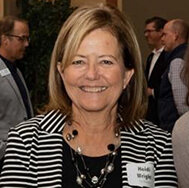
Heidi Wright served as board chair of America's Newspapers in 2023-24.